

 Français
 Español
 Products
 About Us



A breathing circuit in anaesthesia is the gas pathway that connects the patient to the anaesthesia delivery system. It allows fresh gases to reach the patient while providing a route for exhaled gases to leave the patient side of the system or, depending on the circuit configuration, return through the breathing system.
Although breathing circuits may look like relatively simple tubing assemblies, their function depends on the complete arrangement of tubing, connectors, valves, reservoir components, filters, gas-flow pathways, and the anaesthesia equipment to which they are connected.
What Does a Breathing Circuit Do in Anaesthesia?
During anaesthesia, the breathing circuit forms the connection between the patient airway and the anaesthesia machine or breathing system. Its primary purpose is to maintain a controlled pathway through which oxygen and, where applicable, anaesthetic gases can be delivered to the patient.
The circuit also provides a pathway for exhaled gases. What happens to those gases depends on the breathing-system design. In some configurations, exhaled gas is discharged from the system, while in rebreathing systems a portion may circulate again after appropriate carbon dioxide management.
This is why the term anaesthesia breathing circuit describes more than a length of tubing. The circuit operates as part of a complete gas-delivery and ventilation system.
Main Components of an Anaesthesia Breathing Circuit
The exact components of a breathing circuit vary according to the circuit design and the anaesthesia equipment being used. A typical configuration may include the following elements:
Breathing tubing: creates the main pathway between the anaesthesia system and the patient. Depending on the circuit, inspiratory and expiratory gas may travel through separate limbs or through a combined arrangement.
Patient connection or Y-piece: connects the breathing limbs or circuit tubing to the patient-side airway device where applicable.
Machine-side connectors: provide the interface between the breathing circuit and the corresponding ports on the anaesthesia equipment.
Reservoir bag: may form part of certain breathing-system configurations and can provide a gas reservoir while also allowing manual ventilation in suitable systems.
Filters and other accessories: depending on the intended configuration, the circuit may also incorporate filters, sampling connections, elbows, adapters, or other accessories.
Because configurations vary, individual breathing circuit parts should be considered in relation to the complete anaesthesia breathing system rather than as isolated components.
How Does Gas Move Through an Anaesthesia Breathing Circuit?
In a conventional dual-limb breathing circuit, fresh gas moves toward the patient through the inspiratory pathway, while exhaled gas returns through the expiratory pathway. The exact route depends on the design of both the circuit and the connected anaesthesia machine.
In systems that permit rebreathing, exhaled gas may pass through the breathing system before part of it is returned toward the patient. Carbon dioxide must be appropriately managed within the complete system before rebreathed gas can be safely delivered again.
Other circuit arrangements use different gas pathways. A coaxial breathing circuit, for example, places one gas pathway inside another, creating a compact arrangement while maintaining separate inspiratory and expiratory flow paths according to the specific circuit design.
How Are Breathing Circuits Classified in Anaesthesia?
Breathing circuits used in anaesthesia can be described in more than one way. Traditional breathing-system classifications include open, semi-open, semi-closed, and closed systems, based mainly on gas flow, rebreathing, fresh gas requirements, and carbon dioxide management.
The physical tubing can also differ in design. Common product configurations include corrugated, expandable, coaxial, and smoothbore breathing circuits. These terms describe the construction of the tubing rather than the complete functional classification of the breathing system.
Common Tubing Designs Used in Anaesthesia Breathing Circuits
In addition to the functional breathing-system classification, the tubing configuration affects how the circuit is positioned, connected, and handled around the anaesthesia workstation and patient.
| Design | Structural Feature | Practical Difference |
|---|---|---|
| Corrugated | Flexible corrugated tubing | Allows flexible positioning around the patient and equipment |
| Expandable | Extendable and compressible tubing | Allows circuit length to be adjusted for the setup |
| Coaxial | One gas pathway positioned inside another | Provides a compact arrangement for separate gas pathways |
| Smoothbore | Relatively smooth internal tubing surface | Provides a different internal gas pathway from conventional corrugated tubing |
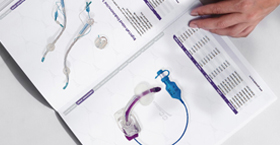
GCMEDICA breathing circuit configurations include:
What Should Be Checked in an Anaesthesia Breathing Circuit?
A breathing circuit must function as part of the complete anaesthesia system, so correct connection and circuit integrity are important before and during use.
Circuit connections are secure and match the intended equipment ports
Tubing is not visibly damaged, obstructed, compressed, or kinked
Patient-side and machine-side components are connected in the intended configuration
Required filters, reservoir components, adapters, and accessories are correctly positioned
System checks specified for the anaesthesia equipment and circuit configuration have been completed
The exact pre-use check depends on the anaesthesia workstation, circuit configuration, and facility procedure. The breathing circuit should therefore be used and checked according to the applicable equipment instructions and clinical protocol.
Common Breathing Circuit Problems to Watch For
Because the circuit is the physical gas pathway between the patient and anaesthesia system, problems involving connections or circuit integrity can affect the performance of the complete breathing system.
| Issue | What to Consider |
|---|---|
| Leak | Loose connections, damaged tubing, or improperly seated components can compromise circuit integrity. |
| Disconnection | Patient-side and machine-side connections should remain secure throughout use. |
| Obstruction or kinking | Tubing position and circuit layout should not interfere with the intended gas pathway. |
| Incorrect connection | Connectors and accessories should be assembled according to the intended circuit and equipment configuration. |
| Contamination | Circuit handling, filters, reuse limitations, and replacement practices should follow the product instructions and facility infection-control procedures. |
How Should a Breathing Circuit Be Selected for Anaesthesia?
There is no single breathing circuit configuration that is appropriate for every anaesthesia setup. Selection depends on the complete system requirements rather than one tubing characteristic alone.
Relevant factors may include:
Compatibility with the anaesthesia machine or breathing system
Adult or paediatric circuit requirements
Circuit length and positioning around the patient
Inspiratory and expiratory pathway configuration
Tubing design and flexibility requirements
Required connectors, bags, filters, sampling ports, or accessories
Product instructions and the intended clinical configuration
For buyers and distributors comparing anaesthesia breathing circuits, defining the required equipment connection, tubing design, circuit length, patient category, and accessory configuration before comparing individual products can make specification matching more straightforward.